Full book feature
The Strongest Interview Answers Are Built on Evidence, Not Memorization
A job interview creates an unusual professional challenge.
You may have spent fifteen or twenty years building expertise, leading teams, solving problems, making decisions, handling difficult situations, producing results, and learning from mistakes.
Then someone gives you ninety seconds to explain why any of it matters.
That compression is what makes interviewing difficult.
The problem is rarely that accomplished professionals have nothing to say. The problem is deciding what evidence to use, how to organize it, how much context the interviewer needs, and how to communicate the answer clearly under pressure.
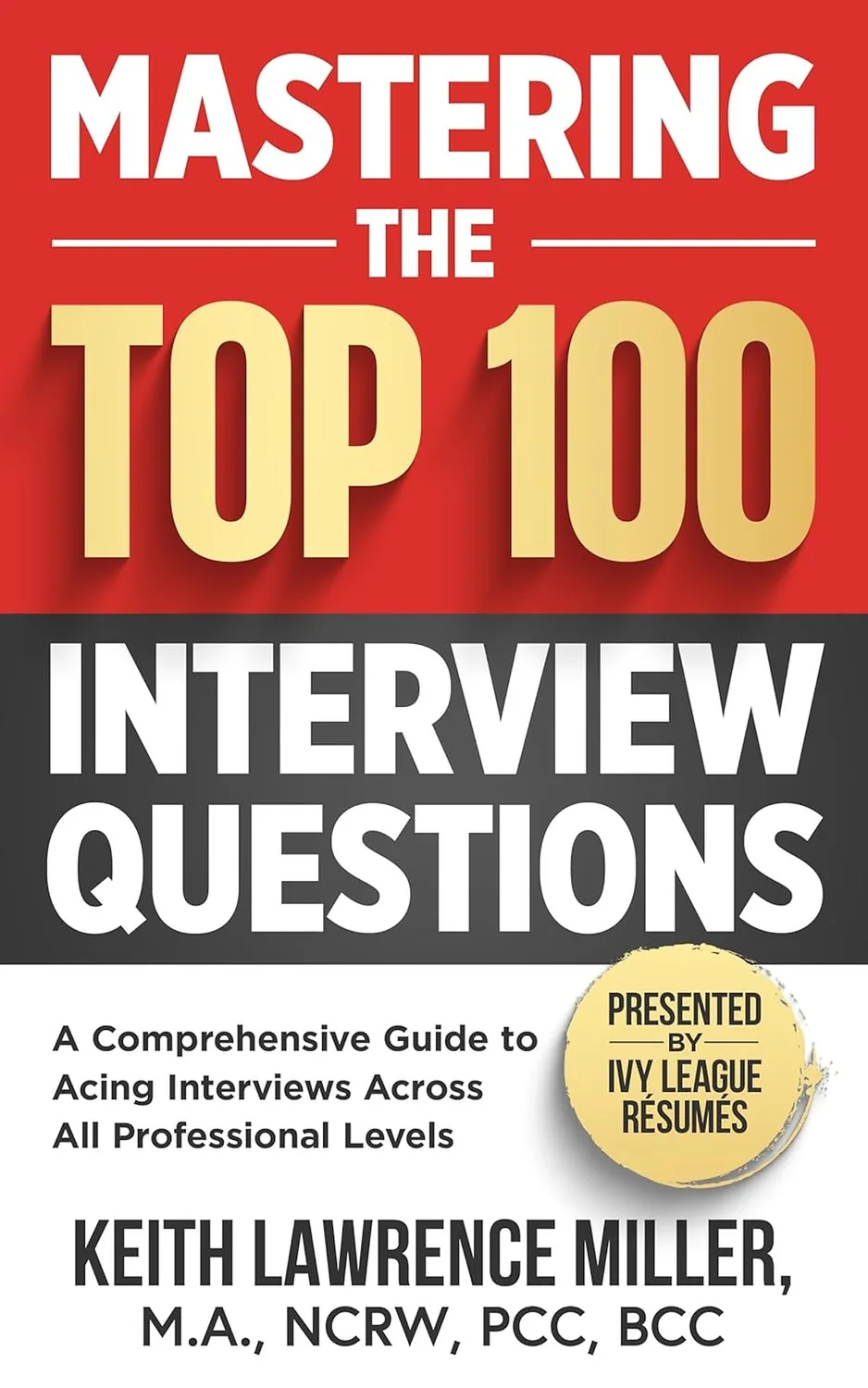
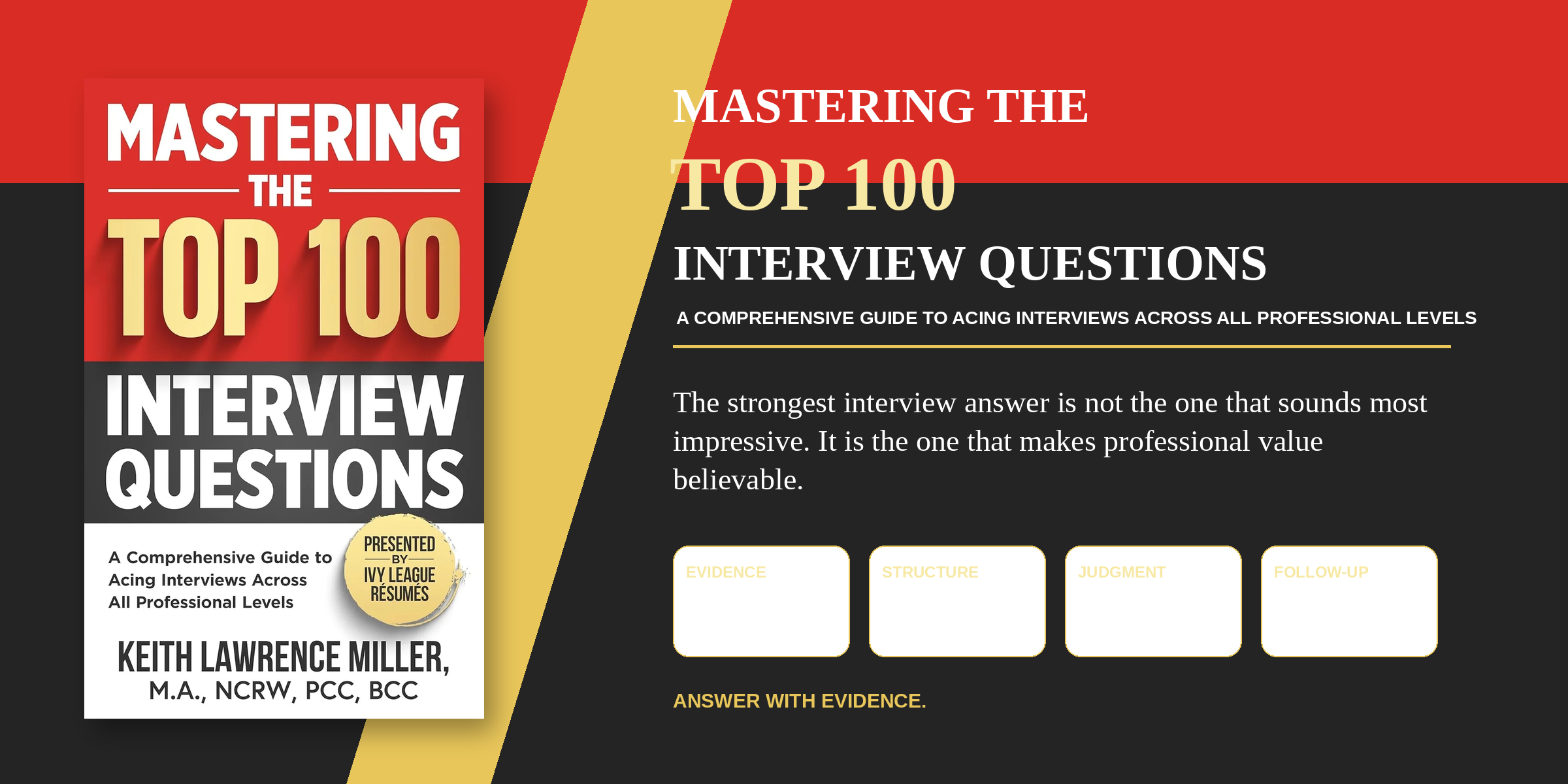
That is the purpose of Mastering the Top 100 Interview Questions.
The book organizes common and high-stakes interview questions so candidates can understand more than the words being asked. The larger objective is to recognize what the interviewer is trying to evaluate, identify the strongest evidence from your own career, structure that evidence coherently, and communicate it in a way that remains credible when the interviewer asks the next question.
Good interviewing is not about memorizing one hundred answers. It is about becoming better at explaining your professional value.
The Interview Is an Evidence Conversation
Candidates sometimes approach interviews as though they are taking an oral exam.
They search for the “right answer.” They memorize scripts. They rehearse phrases that sound impressive. Then the interviewer changes the wording, asks for another example, challenges an assumption, or follows up on a detail.
The script collapses.
A stronger approach starts with evidence.
When an employer asks about leadership, decision-making, conflict, change, achievement, failure, motivation, judgment, collaboration, or professional goals, the interviewer is trying to reduce uncertainty.
Can this person do the work? How do they think? How do they behave when conditions become difficult? What evidence supports the claims on the résumé? What happens when something goes wrong? How do they work with other people? Can they communicate clearly? Do their examples match the level of responsibility required by the role?
The interview is therefore a process of converting career experience into credible evidence.
One Hundred Questions Do Not Require One Hundred Scripts
The title of the book contains one hundred questions. That does not mean the best preparation strategy is to write one hundred memorized answers.
Many interview questions test overlapping dimensions.
A story about leading a major transformation may demonstrate leadership, communication, stakeholder management, judgment, resilience, and execution. A difficult client engagement may provide evidence about conflict resolution, influence, problem solving, composure, and accountability. A failed initiative may reveal self-awareness, learning, decision-making, and the ability to recover.
This creates a more efficient preparation strategy: build a library of strong professional evidence.
Know your best examples deeply enough that you can use them from different angles. The goal is adaptability.
Start With the Question Behind the Question
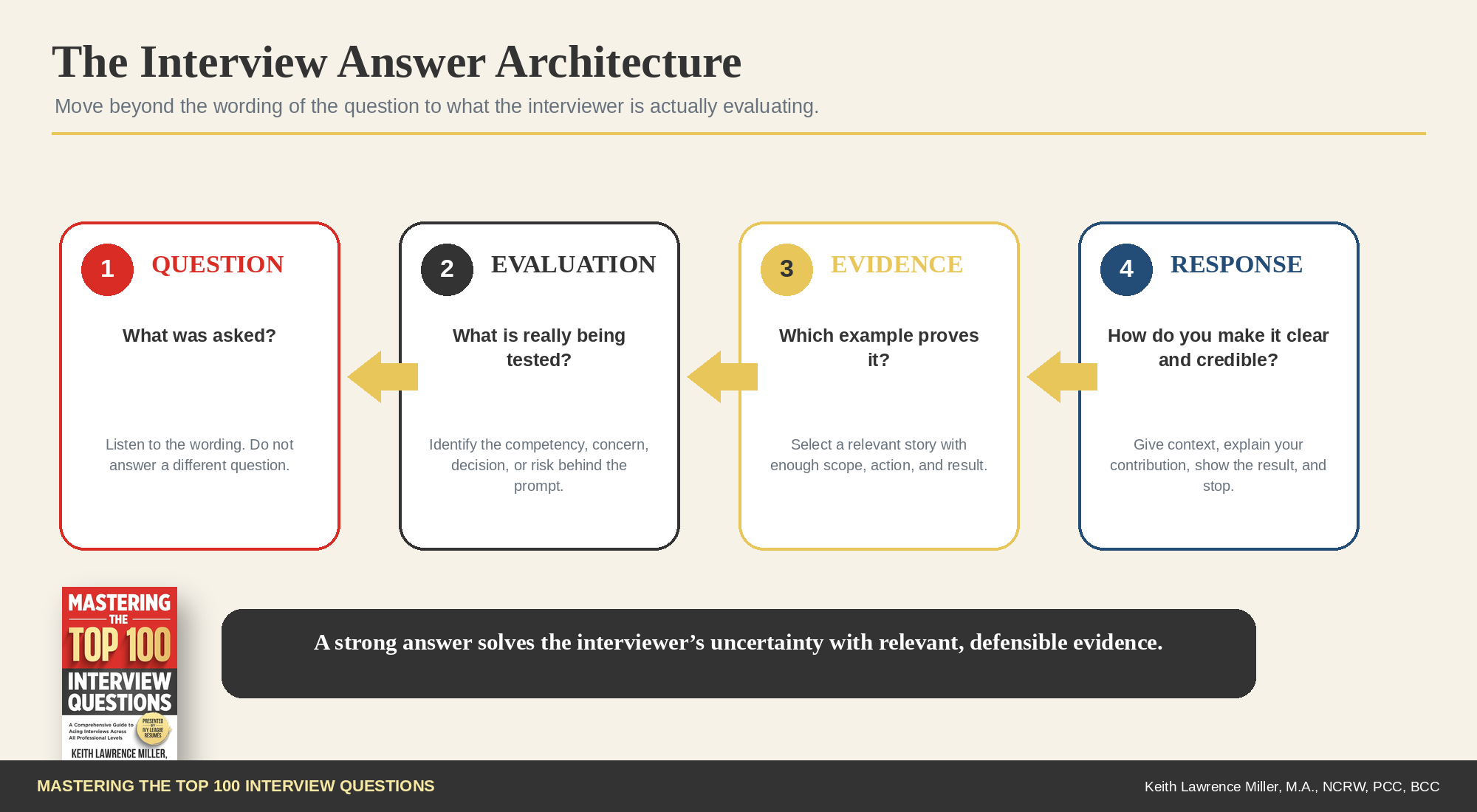
Interview questions have a surface meaning and an evaluative meaning.
The surface question may ask about a past situation.
The evaluative question is: What does this example tell me about how you are likely to perform here?
That distinction changes the answer.
A candidate who hears only the surface question may tell a long story. A candidate who understands the evaluation identifies the evidence that matters.
Before answering, mentally ask: What competency is being tested? What concern might the interviewer be trying to resolve? What would strong performance look like in this role? Which example from my background provides the clearest evidence? What does the interviewer need to remember when I finish?
Evidence Must Match the Level of the Role
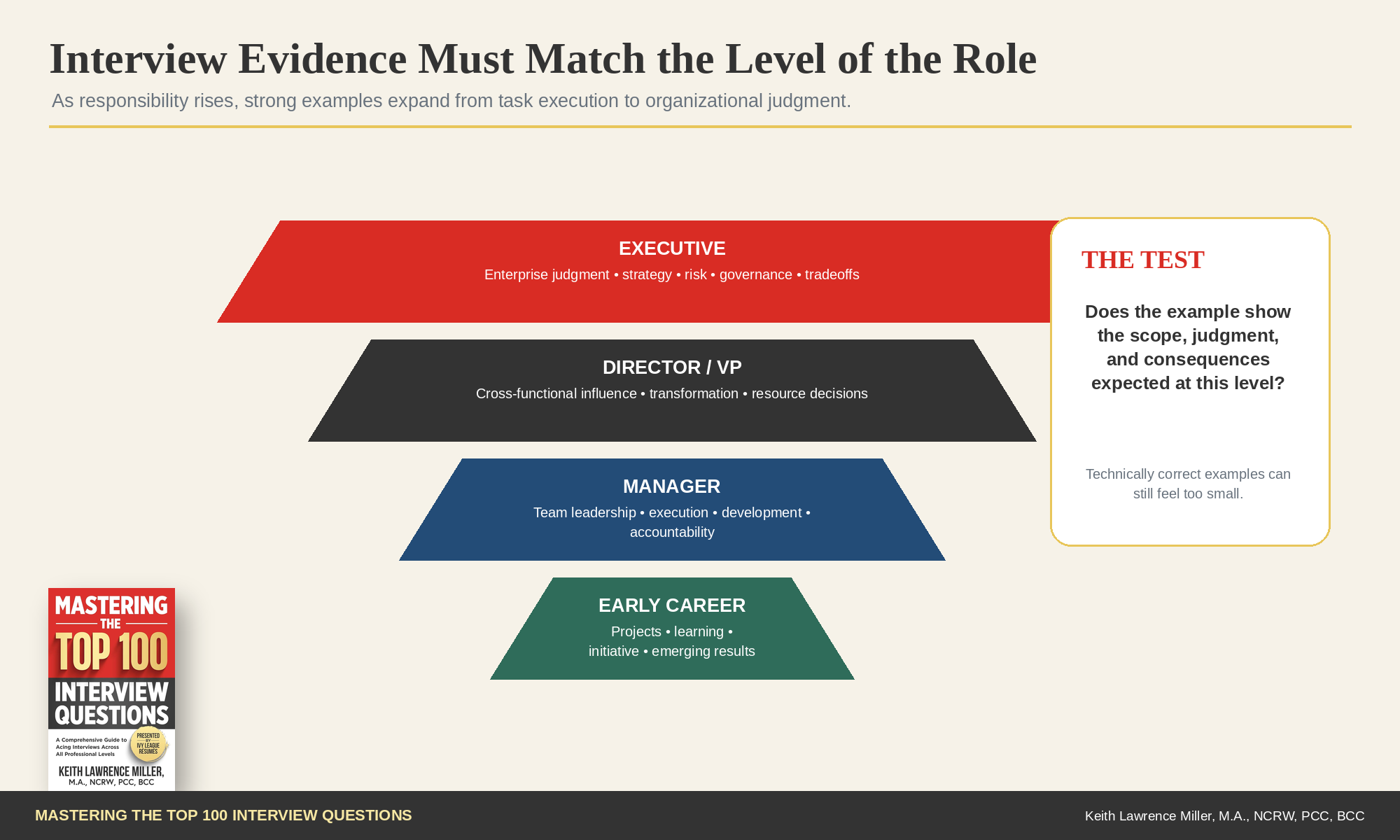
Not every good example is a good interview example. The evidence needs to match the opportunity.
A first-line manager might demonstrate leadership through team performance, coaching, scheduling, conflict resolution, and execution. A director may need examples involving cross-functional leadership, budget responsibility, organizational change, competing priorities, and broader stakeholder influence.
A vice president may need to communicate enterprise impact, strategic judgment, executive relationships, resource allocation, risk, transformation, and leadership through other leaders.
A C-suite candidate may be evaluated on an even wider field: business judgment, capital allocation, governance, board relationships, organizational consequences, enterprise risk, culture, succession, and strategic tradeoffs.
The interview evidence should rise with the level of the role.
A technically correct answer can still feel too small if the example does not reflect the expected scope.
Structure Creates Clarity
Strong interview answers usually contain a recognizable sequence.
The interviewer needs enough context to understand the situation. Then the candidate needs to explain what they personally did. Then the answer needs to show what happened. Finally, the relevance of the example should be clear.
What Was Happening?
Give enough context to understand the situation, challenge, objective, and stakes.
What Was Your Responsibility?
Clarify your role, authority, constraints, and accountability.
What Did You Actually Do?
Explain the decision, action, analysis, change, communication, influence, or tradeoff.
What Happened?
Show the result: revenue, savings, time, quality, growth, retention, customer impact, risk reduction, team performance, a changed decision, or a meaningful lesson.
The result does not always need to be numerical. It does need to be meaningful.
A Strong Answer Can Survive Follow-Up
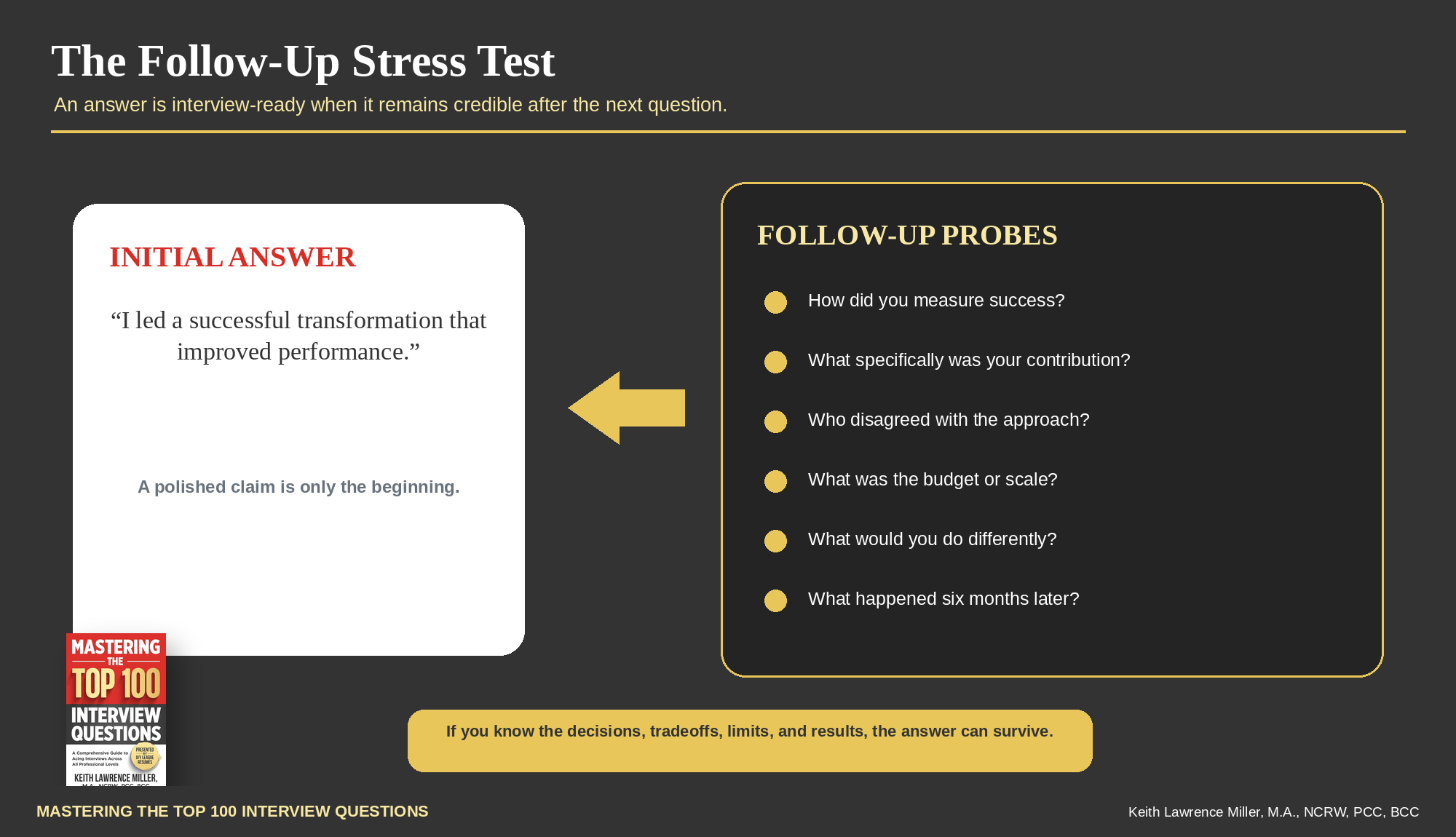
One of the best tests of interview preparation is simple: Can the answer survive another question?
Suppose you describe a project as successful. The interviewer may ask how you measured success, who disagreed with your approach, what you would do differently, how large the budget was, what specifically you contributed, what resistance you encountered, why you chose that approach, or what happened six months later.
A memorized answer often sounds strong until one of those questions arrives.
Evidence-based preparation goes deeper. You know the story. You understand the decisions. You remember the tradeoffs. You know what you personally contributed. You know the limits of the example.
That creates credibility.
Do Not Confuse Length With Strength
Some candidates believe more detail makes an answer more convincing.
Usually the opposite happens.
An interviewer does not need the entire history of the project. The answer needs enough context to make the evidence understandable. Then it needs to move.
Long answers create several risks. The candidate may lose the central point. The strongest accomplishment gets buried. The interviewer may stop listening. Additional details can introduce unnecessary weaknesses. Time disappears that could have been used for another question.
The discipline is selective communication.
Say enough. Prove the point. Then stop.
Specificity Beats Adjectives
Interviews often become filled with self-description.
“I am strategic.” “I am collaborative.” “I am results-oriented.” “I am an excellent communicator.” “I am a strong leader.”
Those statements are easy to make.
Evidence is more persuasive.
Instead of telling the interviewer you are collaborative, describe the cross-functional situation. Instead of claiming leadership, explain the decision and the people affected. Instead of saying you are results-oriented, show the result. Instead of describing yourself as resilient, explain what happened when the original plan failed.
Adjectives create claims. Stories create evidence.
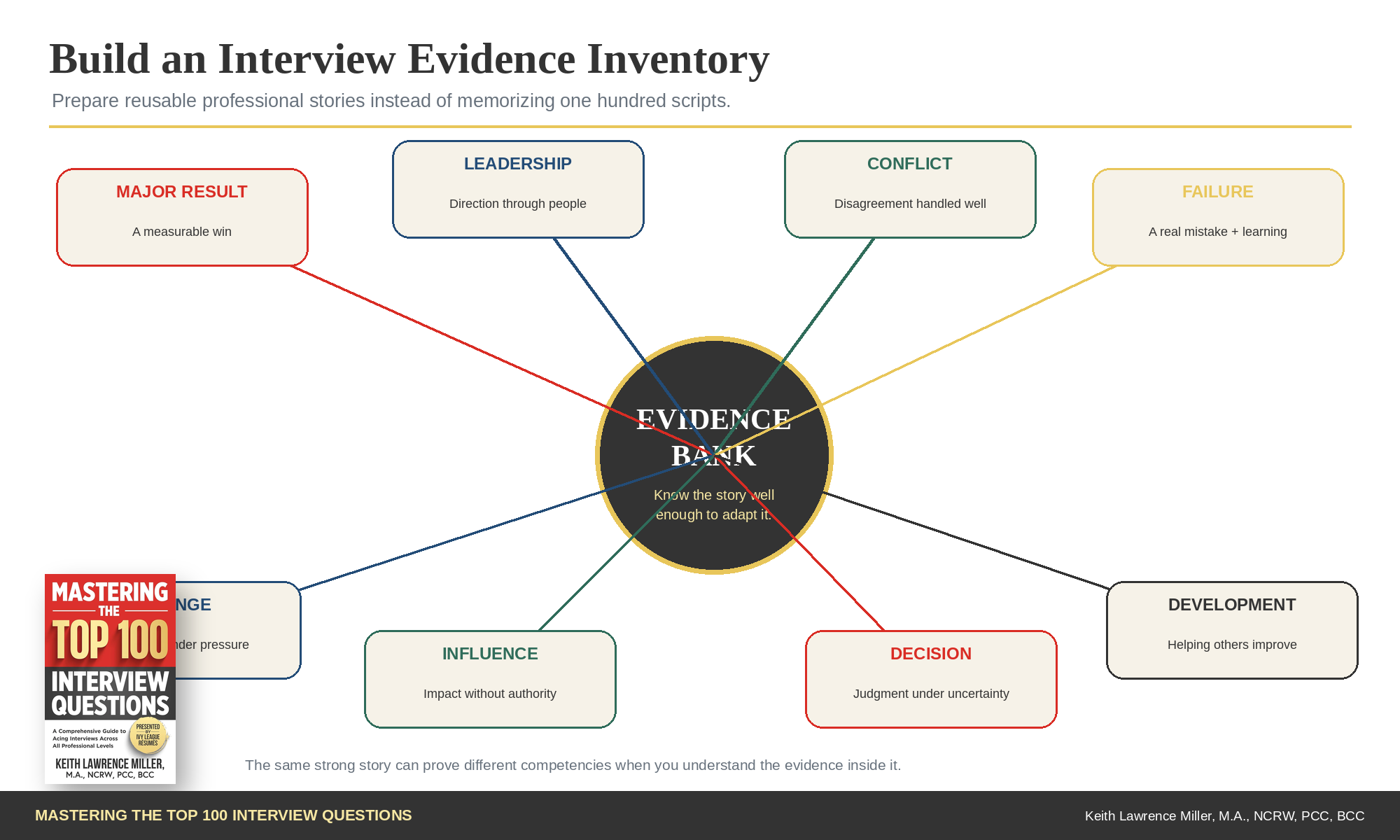
Build an Interview Evidence Inventory
Before a serious interview, identify the strongest examples from your career.
Do not wait until the question is asked.
Your inventory might include a major accomplishment, a difficult problem, a leadership challenge, a disagreement, a change initiative, a failure, a recovery, a high-pressure decision, a difficult stakeholder, a successful collaboration, a process improvement, a customer problem, a cost-saving initiative, a growth initiative, a project requiring influence without authority, competing priorities, a time you changed your mind, a time you developed someone else, or a moment when ethical or professional judgment mattered.
These stories become reusable evidence. The question may change. The evidence remains available.
Know Your Numbers
Interview preparation should include quantitative memory.
Candidates often put strong numbers on a résumé and then struggle to explain them.
If the résumé says revenue increased 28%, the interviewer may ask: From what baseline? Over what period? What part did you personally own? What else affected the result? How was the number calculated?
If you managed a $50 million operation, understand what that number means. If you led 300 employees, be able to explain the organization. If you reduced costs, know where. If you increased retention, know the period and population.
Numbers strengthen credibility when the candidate understands them.
Prepare the Career Narrative
The interview is broader than individual answers.
The entire conversation should make sense as a career narrative.
How did you get here? Why did you make major transitions? How did your responsibilities grow? What have you learned? Why does this role make sense now? What connects your past experience with the organization’s future need?
This is especially important for long careers, multiple industries, career gaps, major pivots, short tenures, consulting backgrounds, entrepreneurial experience, military transitions, and nonlinear advancement.
The interviewer should not have to assemble the logic themselves.
Difficult Questions Are Tests of Judgment
Some questions create discomfort because they involve weakness, conflict, failure, termination, performance problems, career gaps, difficult managers, or decisions that did not work.
These answers deserve careful preparation.
The temptation is to become defensive, evasive, or so polished that the answer no longer sounds credible.
A stronger response acknowledges the issue, provides enough context, demonstrates what you did, and shows what you learned or how you changed.
An interviewer does not necessarily expect a career without mistakes. They may be evaluating whether you can discuss mistakes with maturity.
Failure Answers Need an Actual Failure
One common interview problem is the disguised-success answer.
The candidate is asked about failure and describes a project that was difficult but ultimately exceeded every goal.
The answer avoids vulnerability, but it also avoids the question.
A real failure does not require self-destruction. It requires honesty.
What did you misjudge? What did you fail to anticipate? What did the outcome cost? What did you learn? What changed in your approach afterward?
Reflection can become evidence of judgment.
Leadership Answers Should Show Leadership
A leadership answer should reveal more than the fact that people reported to you.
Leadership evidence can include setting direction, making a difficult decision, clarifying expectations, developing talent, managing conflict, creating accountability, allocating resources, communicating through change, protecting standards under pressure, building trust, or changing course when evidence demanded it.
The stronger the leadership role, the more important it becomes to show how results were achieved through other people and systems.
Executive Interviewing Requires a Different Altitude
Senior interviews often move away from simple competency questions and toward judgment.
The executive candidate may be asked to interpret incomplete information, evaluate an organization, discuss strategy, respond to a business scenario, challenge an assumption, explain a difficult tradeoff, or describe how they would enter the role.
At that level, the interviewer is evaluating both the answer and the reasoning.
Executive candidates need to demonstrate that they can frame the problem, identify missing information, distinguish symptoms from causes, recognize competing stakeholders, evaluate risk, set priorities, and make decisions without pretending to know what cannot yet be known.
Confidence and certainty are different things.
Cultural-Fit Questions Require Mutual Evaluation
Candidates often treat cultural-fit questions as an exercise in telling the employer whatever the employer wants to hear.
That creates a bad match.
Interviewing should also help the candidate evaluate the organization.
What environment allows you to perform well? What kind of manager helps you do your best work? How are decisions made? How is conflict handled? How much autonomy does the role require? What level of pace, ambiguity, collaboration, structure, or accountability exists?
The objective is not to manufacture compatibility. It is to identify it.
Compensation Is Part of the Interview Strategy
Compensation discussions can create anxiety because candidates fear naming the wrong number.
Preparation helps.
Understand the market, role, level, geography, industry, current compensation, desired total compensation, and the structure of the offer.
Depending on the role, compensation may include base salary, bonus, commission, equity, profit sharing, retirement contributions, signing incentives, benefits, paid time off, flexible work, and professional development.
The strongest negotiation position comes from understanding both your value and the structure of the offer.
Questions for the Interviewer Matter
An interview should not end with the candidate saying they have no questions.
Your questions communicate how you think.
Strong questions can reveal how success will be measured, what the organization needs immediately, what has made previous people successful or unsuccessful, which stakeholders matter most, what challenges are likely to emerge, how decisions are made, what priorities compete, what the hiring manager wants changed, and how the team operates.
Questions also help the candidate determine whether the opportunity deserves continued pursuit.
Research Changes the Quality of the Conversation
Preparation requires more than reading the homepage the night before.
Understand the organization, products, customers, competitors, leadership, business model, recent changes, industry pressures, role, team, and hiring manager where appropriate.
For senior roles, understand the larger business environment.
Research allows you to make your evidence relevant.
Practice Should Improve Thinking, Not Produce Acting
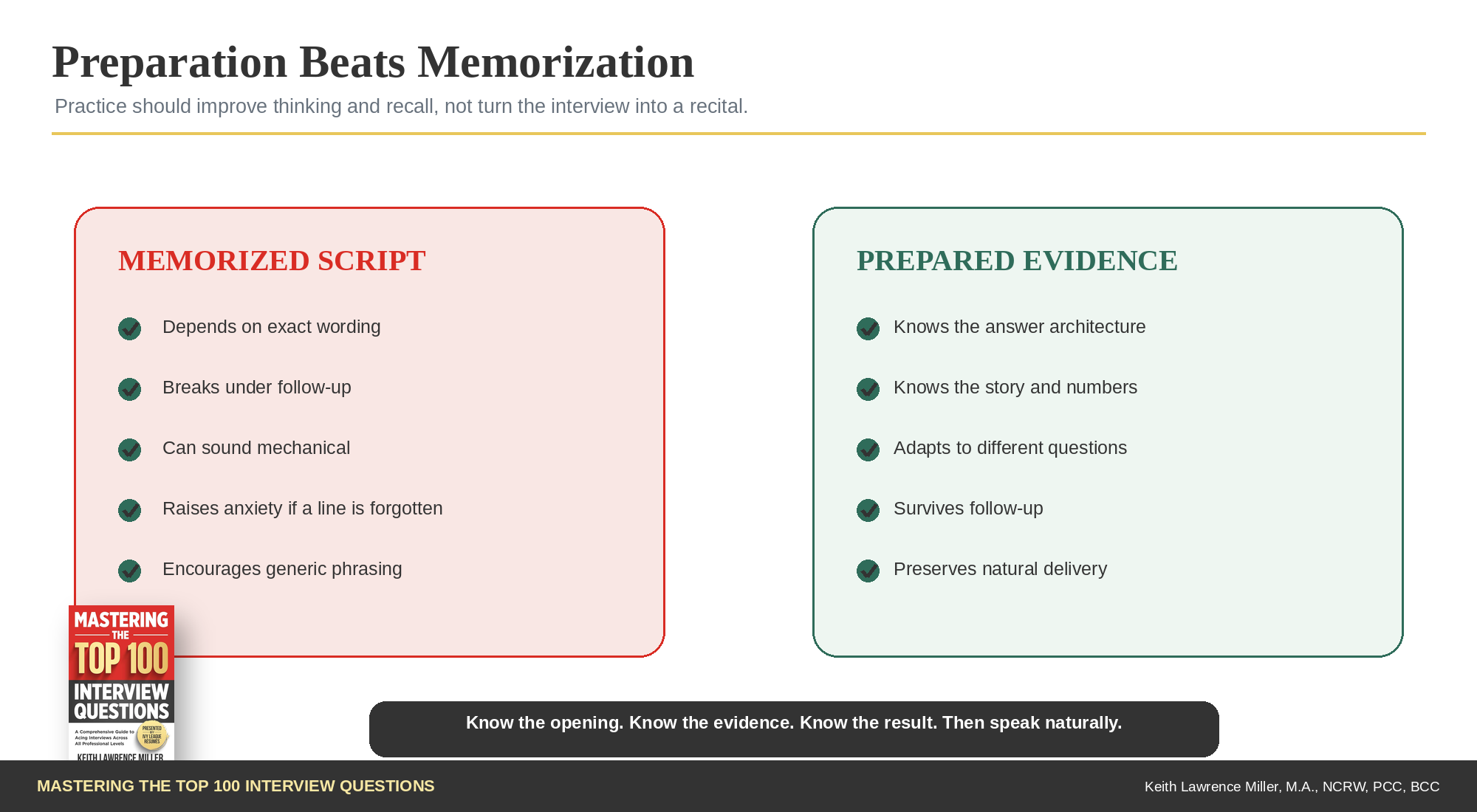
Interview practice is valuable. Over-rehearsal is dangerous.
Candidates who memorize every sentence can sound mechanical. If they forget one phrase, anxiety increases.
A better practice method is to know the architecture of the answer. Know the opening. Know the evidence. Know the result. Know the point. Then speak naturally.
Practice should create familiarity. It should not eliminate authenticity.
Delivery Changes How Evidence Is Received
A strong example can lose impact through poor delivery.
Candidates should pay attention to pace, volume, eye contact, listening, pauses, interruptions, filler words, energy, clarity, length, and remote-interview technology.
Executive presence does not require a theatrical performance. It requires making it easy for the interviewer to follow your thinking.
Confidence Comes From Prepared Evidence
Candidates are often told to “be confident.” That advice is incomplete.
Confidence is easier when preparation reduces uncertainty.
You know your examples. You know your numbers. You know your career narrative. You know what the employer needs. You know your questions. You know what you want from the opportunity. You have already practiced discussing difficult areas.
That preparation frees attention during the interview. Instead of desperately searching your memory for an example, you can listen.
That changes the conversation.
The Interview Is Also a Listening Test
Candidates focus heavily on speaking.
Strong interview performance also requires listening.
The interviewer may reveal what matters through the wording of the question, repeated themes, follow-up questions, concerns, descriptions of the role, what they emphasize, and what they avoid.
Listen for those signals. Then adapt.
An interview is a conversation with an objective, not a recital.
Do Not Chase the “Perfect Answer”
There is no universally perfect response to most interview questions.
The quality of an answer depends on the candidate, role, employer, evidence, level, situation, and interviewer.
That is why generic scripts are limited.
The objective is to develop an answer that is relevant, specific, credible, structured, concise, defensible, and human.
Who Should Read Mastering the Top 100 Interview Questions?
The book is designed to support professionals across career levels.
First-Time Job Seekers
Readers learning how to translate education, internships, projects, and emerging experience into evidence.
Experienced Professionals
Candidates who need to organize years of experience into clear, relevant examples.
Career Changers
Professionals who must demonstrate transferability and explain why the new direction makes sense.
Managers and Leaders
Candidates expected to discuss leadership, judgment, people, decisions, and results.
Executives
Senior professionals preparing for conversations involving strategy, organizational complexity, enterprise impact, and judgment.
Professionals Returning to the Market
Candidates who have not interviewed in years and need a disciplined way to rebuild interview readiness.
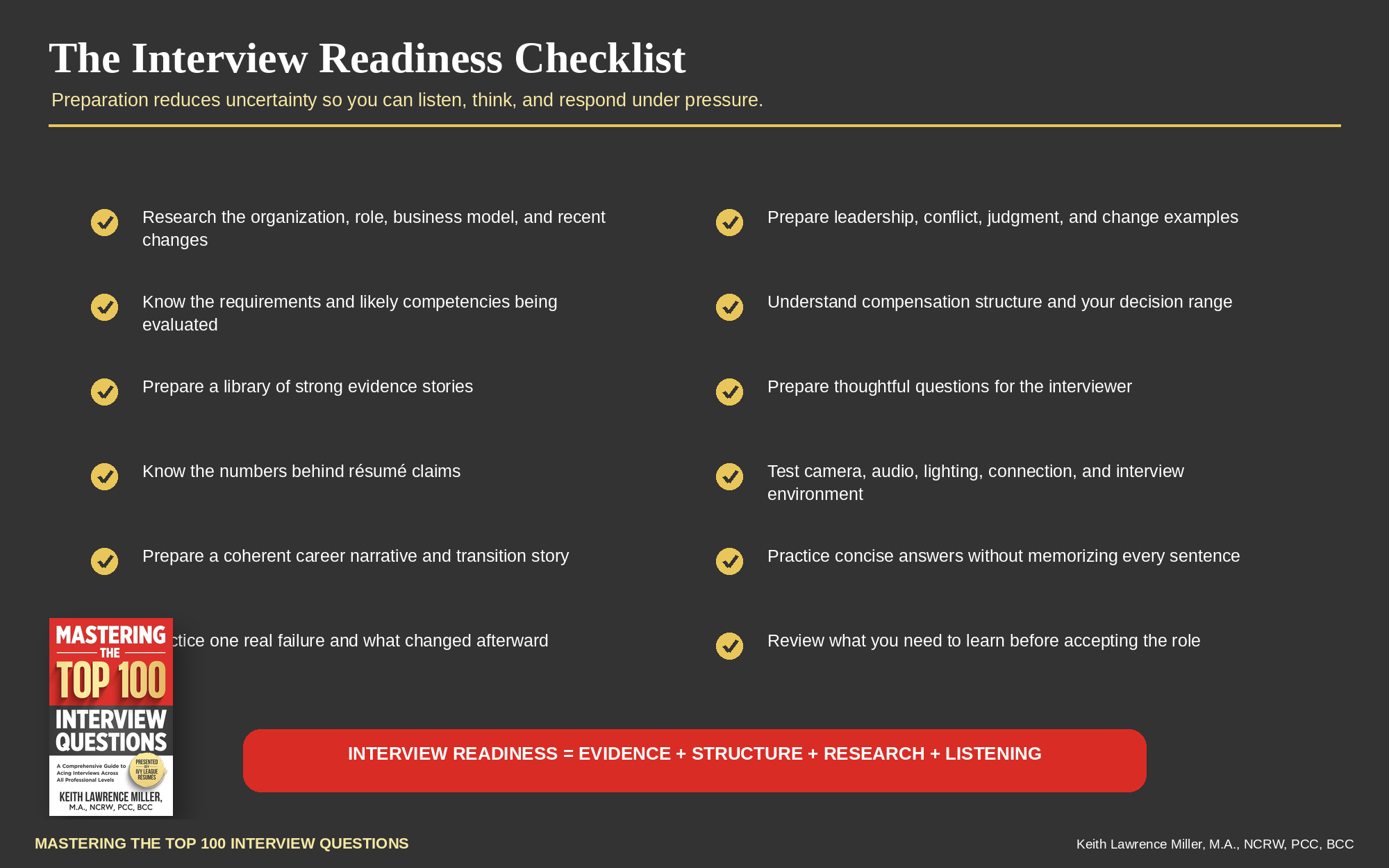
The Real Goal Is Interview Readiness
The value of studying one hundred questions is not the ability to predict exactly what an interviewer will ask.
You cannot.
The value is learning how to respond when the wording changes. How to identify what is being evaluated. How to retrieve the right evidence. How to structure it. How to communicate the result. How to remain credible during follow-up. How to adapt without abandoning your professional story.
That is interview readiness.
Your Experience Is the Source Material
Most professionals already possess far more interview evidence than they realize.
It exists inside projects, problems, failures, promotions, client situations, team challenges, negotiations, decisions, turnarounds, conflicts, accomplishments, and lessons.
The preparation process brings that evidence into usable form.
Then the interview becomes easier to understand.
You are not inventing a convincing candidate. You are learning how to communicate the professional who already exists.
Answer With Evidence
An interview creates uncertainty for both sides.
The employer is trying to determine whether the candidate can perform. The candidate is trying to determine whether the opportunity deserves a career decision.
Evidence improves both judgments.
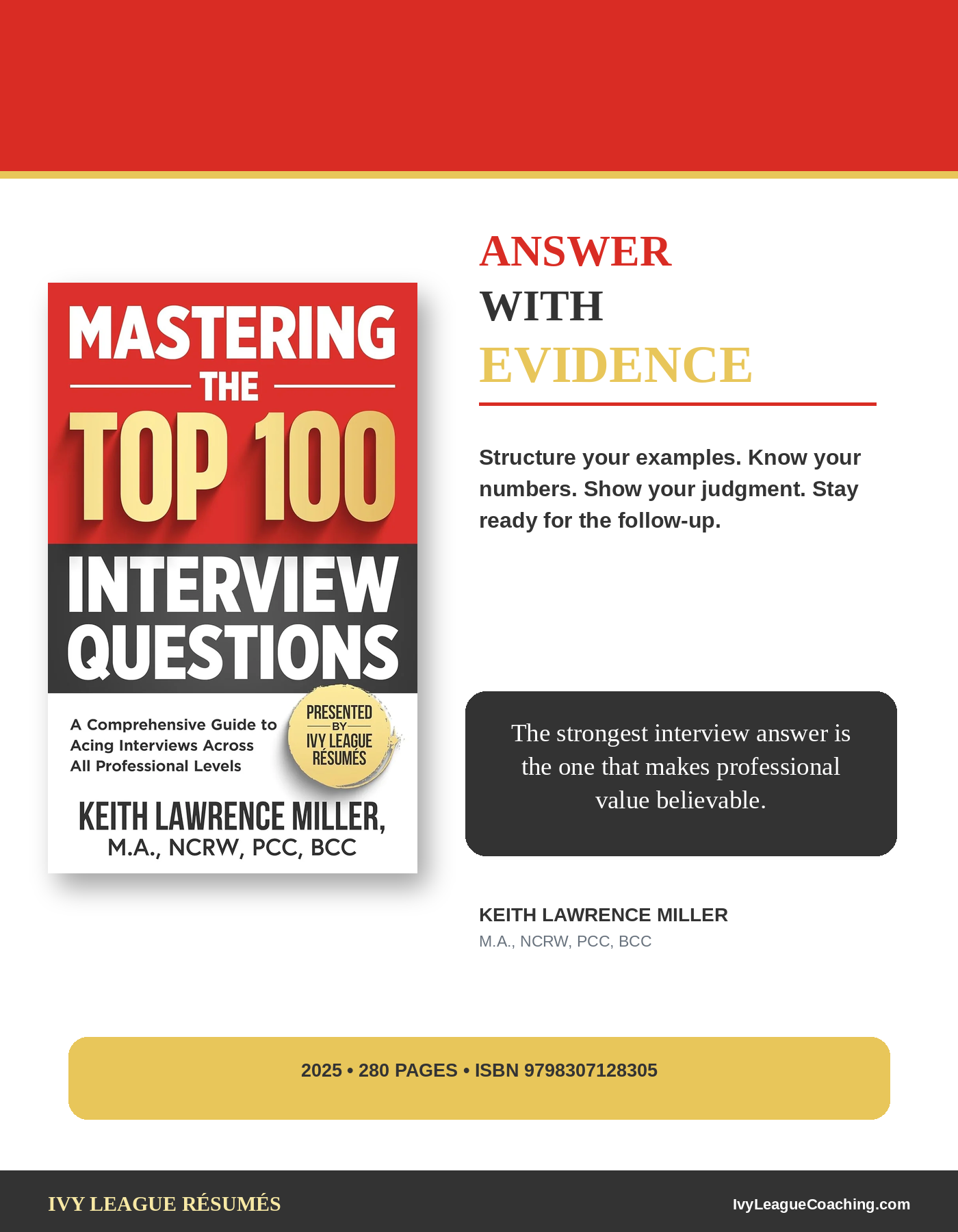
So prepare deeply. Research carefully. Know your career. Choose meaningful examples. Understand your numbers. Listen to the question. Answer what was actually asked. Give enough context. Explain your contribution. Show the result. Stay ready for the follow-up.
And remember the principle at the center of this book:
The strongest interview answer is not the one that sounds most impressive. It is the one that makes professional value believable.
Interview preparation can strengthen communication, evidence selection, and professional readiness, but no interview strategy can guarantee an interview result, job offer, compensation outcome, or employment decision.