The central argument
What this book is trying to do
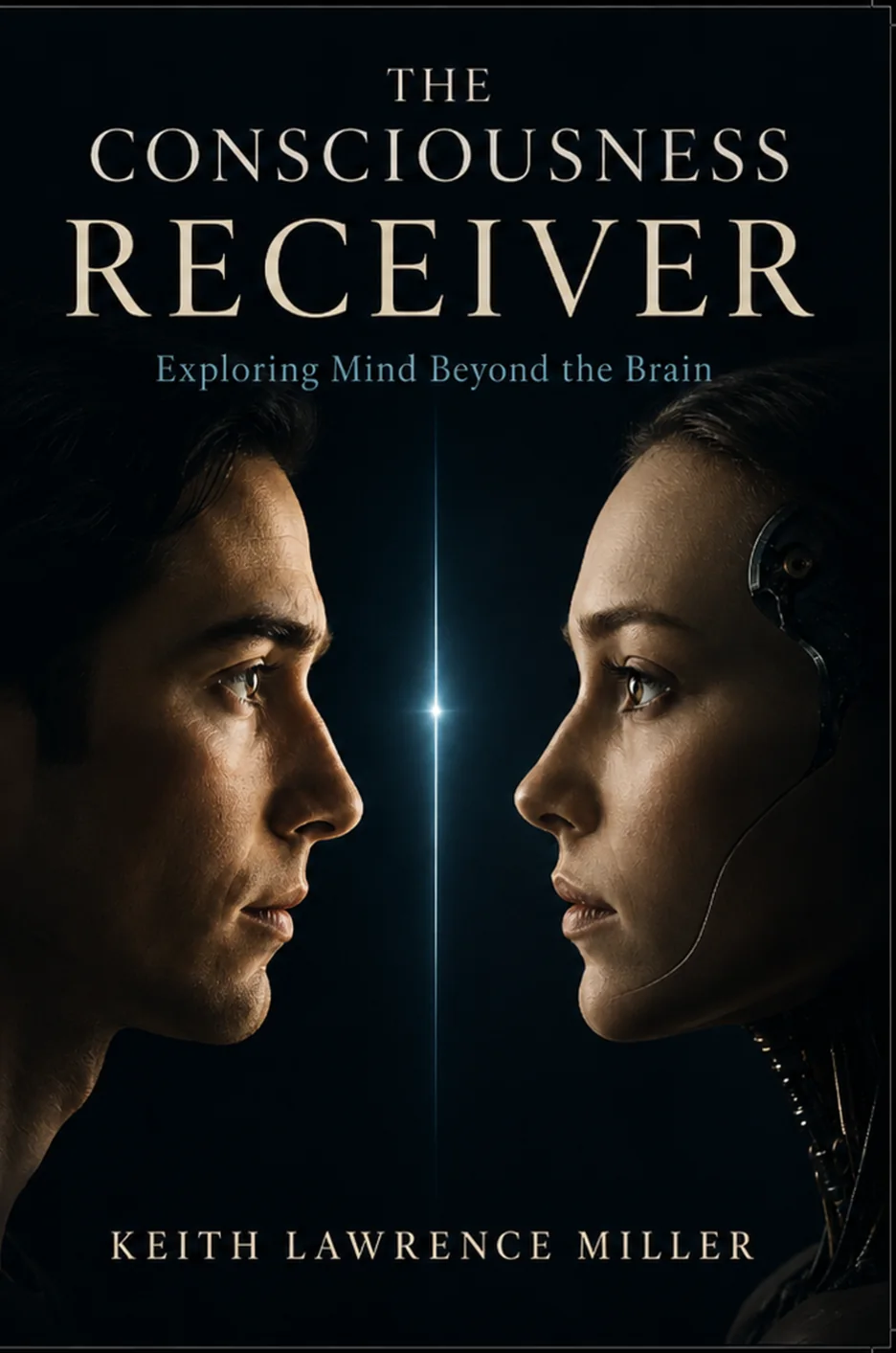
The book tests whether conscious experience is fully produced by the brain, or whether receiver/filter models deserve serious comparison with conventional materialist explanations.
Who it is for: Readers interested in consciousness, neuroscience, philosophy of mind, anomalous cognition, near-death research, AI, memory, and the boundary between evidence and metaphysical interpretation.
Architecture
Inside the book
01The problem of consciousness
02Brain-production models
03Receiver and filter hypotheses
04Near-death and anomalous evidence
05Memory and identity
06Artificial intelligence and mind
07Competing explanations and evidentiary limits
Key ideas
Questions and concepts carried through the work
- A provocative hypothesis should be tested against competing models rather than protected from falsification.
- Mystery is not proof, but unexplained evidence should not be discarded merely because it is inconvenient.
- Consciousness, identity, memory, and survival are separable questions.
- Intellectual balance requires distinguishing empirical evidence from philosophical and metaphysical interpretation.
Author platform
Use the book as an entry point
The 2.0 site connects books to speaking, essays, frameworks, and adjacent titles rather than treating each publication as an isolated product.