Full book feature
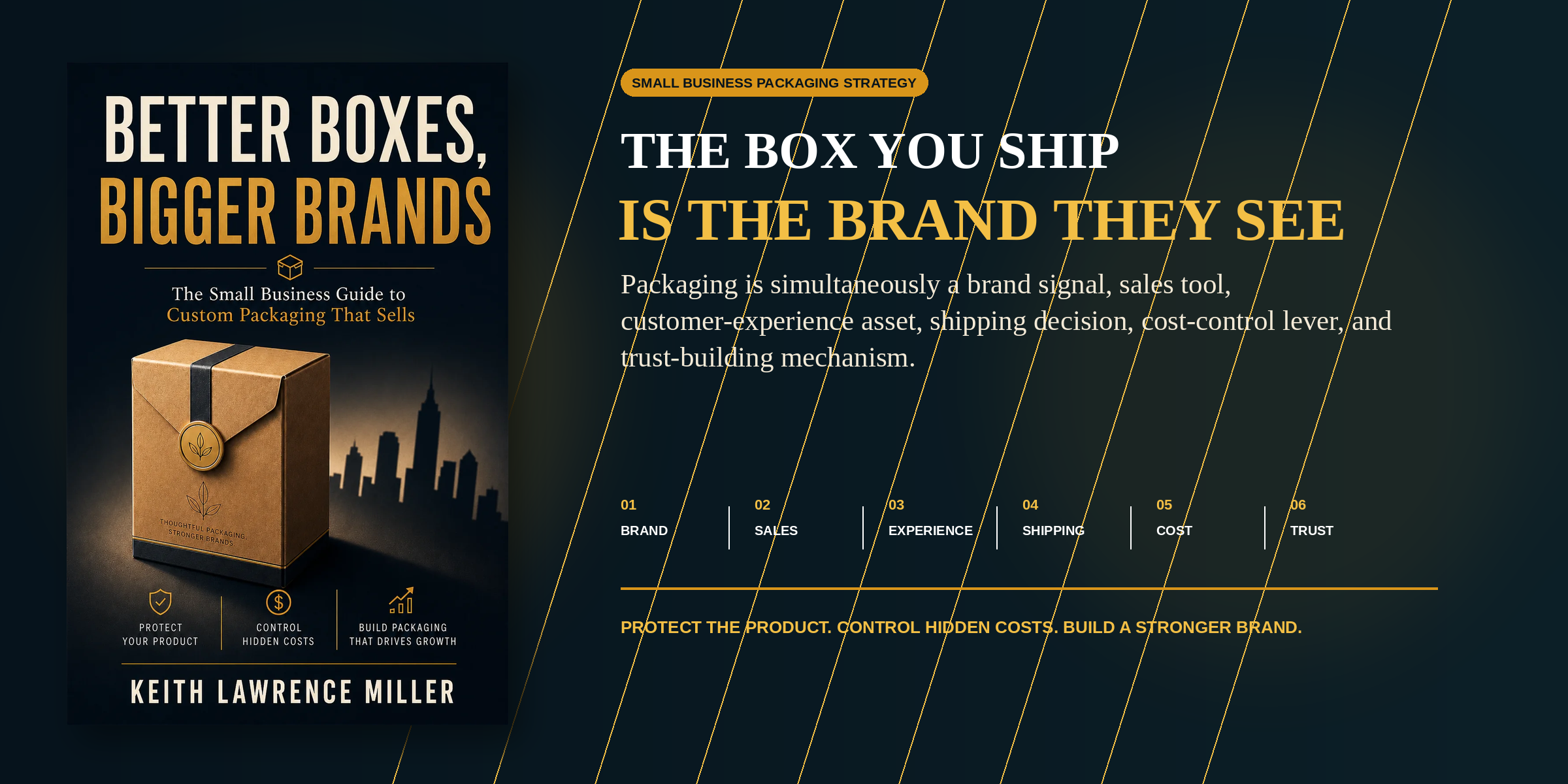
The Box You Ship Is the Brand They See
Somewhere right now, a customer is opening a box.
Maybe it contains skincare. Coffee. A candle. Jewelry. Supplements. Clothing. Electronics. A subscription order someone has been waiting all month to receive.
The product may still be hidden beneath tissue paper or an insert. The customer has already started forming an opinion.
They feel the weight. They see the print. They notice the fit. They notice whether the package feels deliberate. They notice whether the item is protected. They notice whether opening it is easy or irritating. They notice whether the physical experience seems consistent with the price they paid.
For many product businesses, this is the first moment the customer physically encounters the brand.
Everything before it may have happened through a screen. The advertisement was digital. The website was digital. The checkout was digital. The confirmation email was digital.
Then a physical object arrives at the door.
That object has a job to do. Actually, it has six.
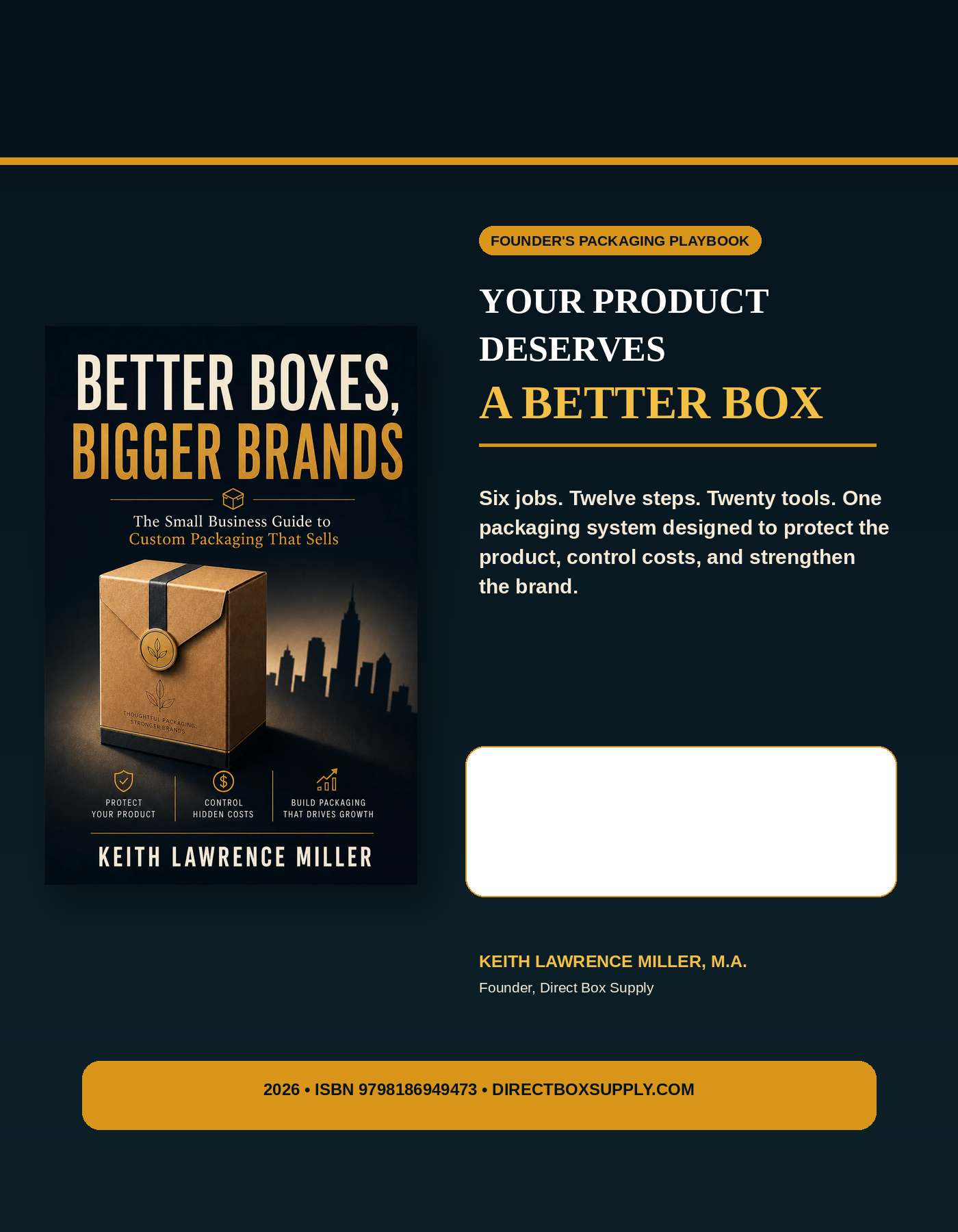
That is the central idea behind Better Boxes, Bigger Brands.
Packaging is part of the business system surrounding the product. It affects perception, protection, shipping, cost, customer experience, retail readiness, repeat ordering, and trust.
Small brands rarely have a packaging department. This book was written to put one in the founder's hands.
The Six Jobs of a Box
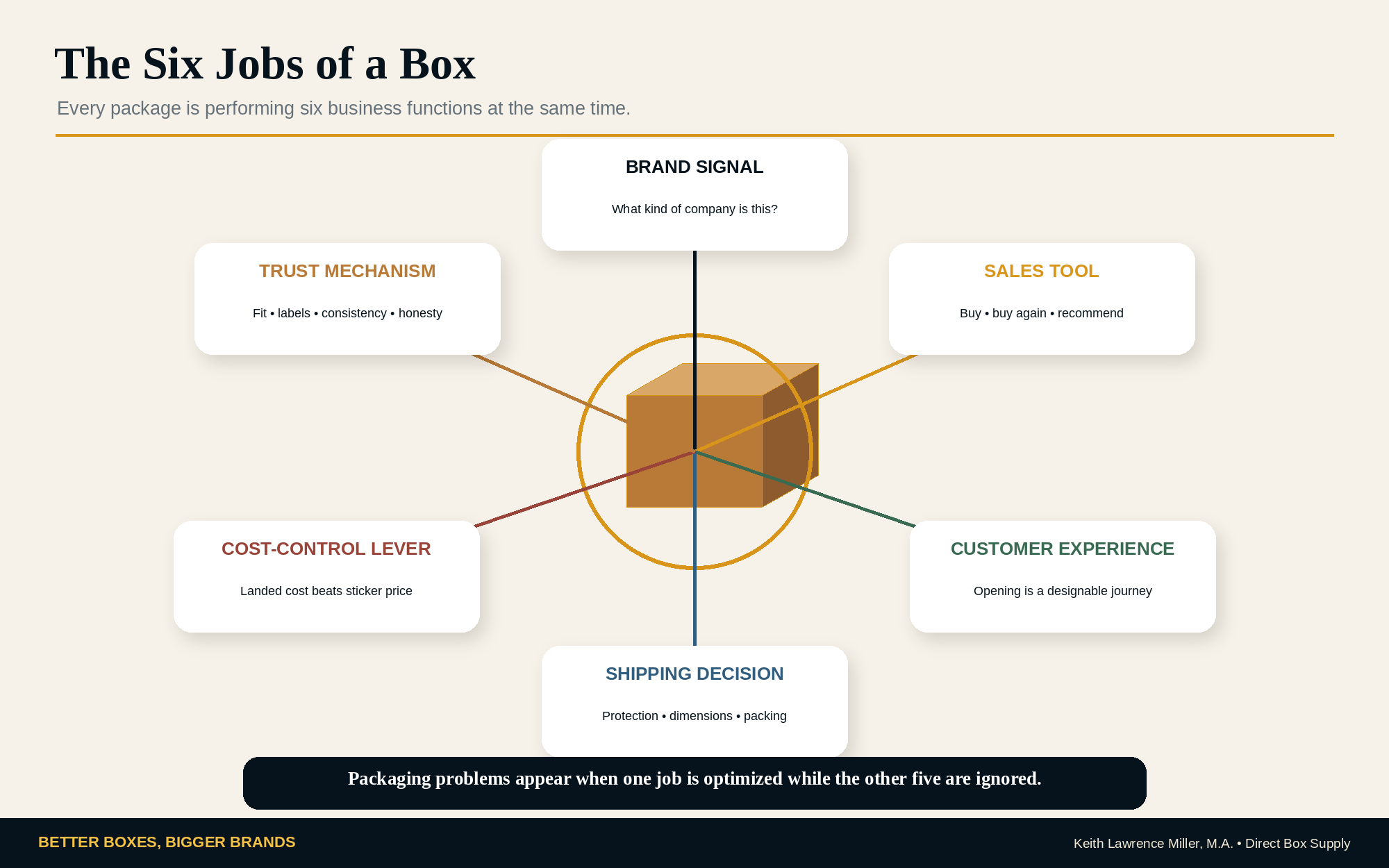
A box is doing several things simultaneously whether the founder planned for them or not.
1. Brand Signal
Before the product becomes visible, the packaging communicates. Board quality, color, print, texture, finish, fit, construction, and even the way the box closes send signals about the company behind the product.
2. Sales Tool
Packaging participates in buying decisions. At retail, it may have only seconds to earn attention. Online, it continues selling after the first transaction by influencing the customer's memory of the purchase.
3. Customer Experience Asset
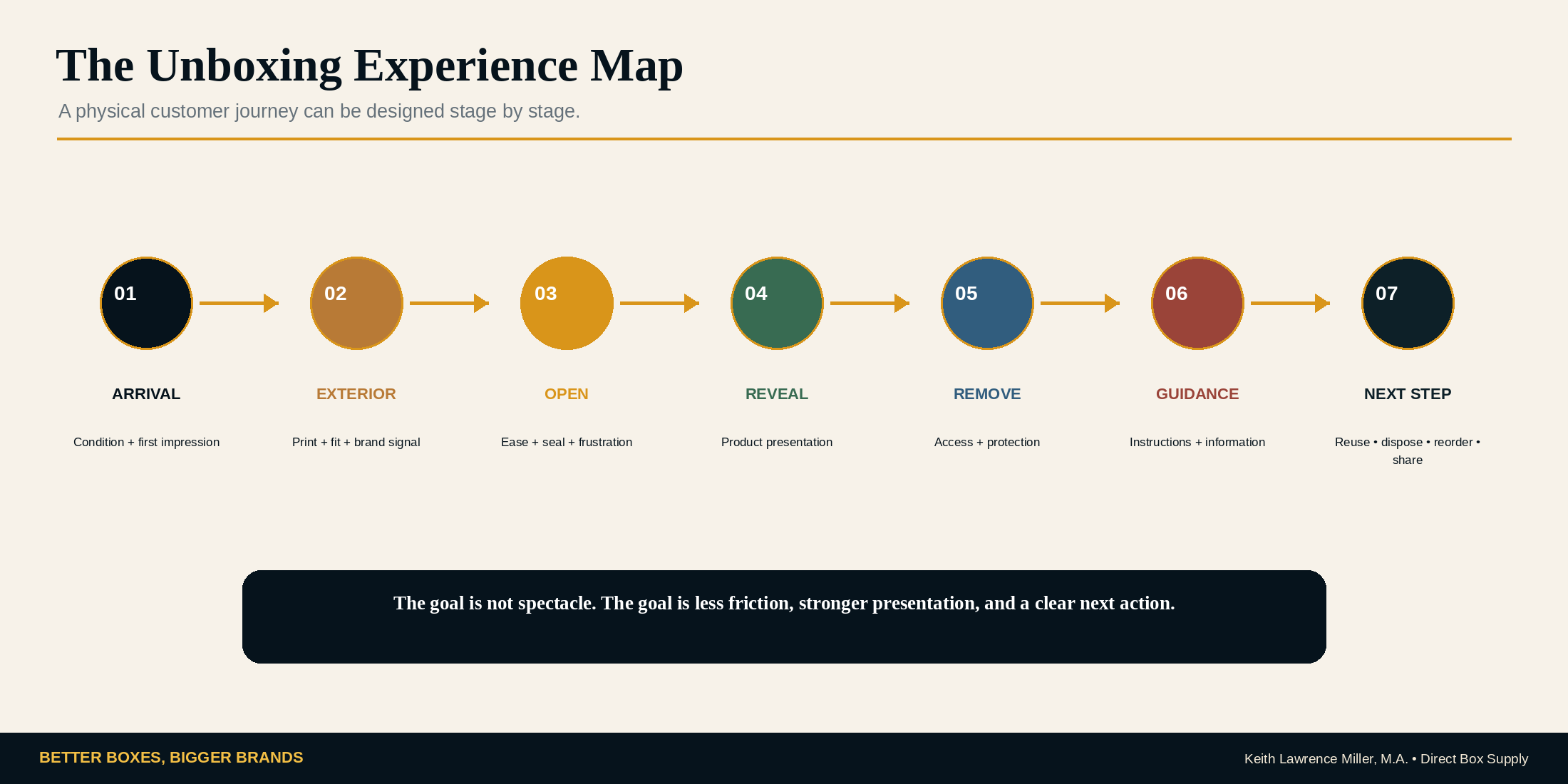
Opening a product is a sequence. Arrival, exterior impression, opening, reveal, product removal, information, disposal or reuse, and the next action can all be designed.
4. Shipping Decision
Size affects shipping. Weight affects shipping. Board strength affects protection. Fit affects movement. Inserts affect damage. Assembly affects packing time. Carton dimensions can affect dimensional-weight charges.
5. Cost-Control Lever
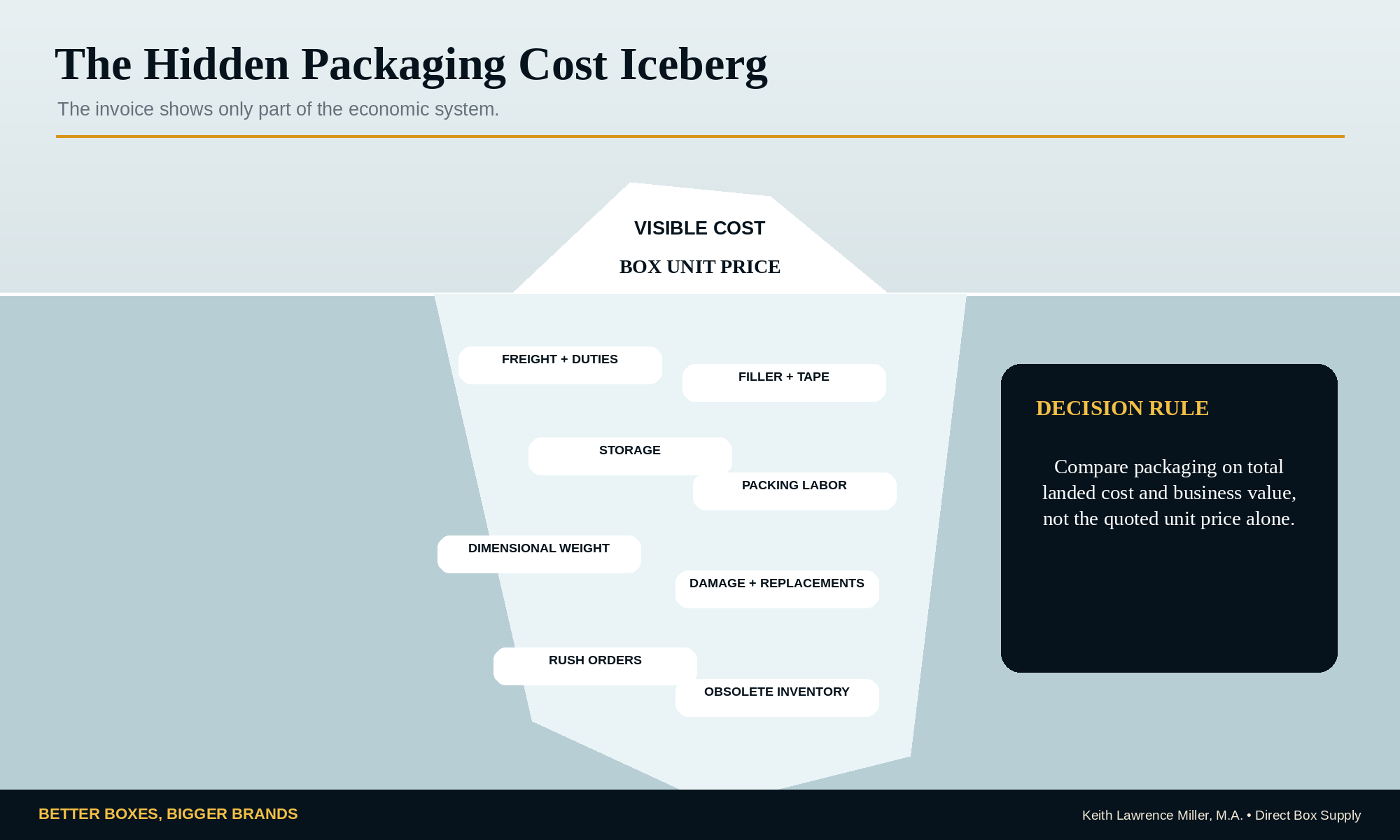
The unit price on a quote is only one part of cost. Real packaging economics can include freight, duties, filler, labels, tape, storage, assembly labor, shipping charges, damage, returns, replacements, rush production, and obsolete inventory.
6. Trust-Building Mechanism
Protection, labeling, fit, quality consistency, tamper evidence where relevant, and responsible sustainability claims all communicate competence.
Most packaging problems begin when one of these jobs is optimized while the other five are ignored.
Packaging Is a Growth Investment
Founders naturally classify packaging as a cost because packaging appears on an invoice.
The business impact is wider.
A right-sized shipping box may use less material, require less filler, reduce dimensional weight, occupy less storage space, pack faster, and arrive in better condition.
A stronger fit or better insert may increase packaging cost slightly while reducing product loss, replacement shipping, customer service time, refunds, and frustration.
The correct comparison is therefore not simply: How much does the box cost?
The better question is: What does the packaging system cost the business, and what value does it create?
Hidden Packaging Costs Deserve Attention
Some packaging costs are easy to see. Others hide elsewhere in the operation.
A damaged shipment may be recorded as a replacement. Excess box size may appear in the carrier invoice. Slow assembly may appear as labor. Overordering may appear as inventory. A production mistake may appear as a write-off. A confusing package may appear as customer service volume.
An underwhelming experience may never appear anywhere. The customer simply does not return.
That is why the book includes a Hidden Packaging Cost Worksheet: bring the invisible costs into the decision.
Customers Feel Quality Before They Explain It
Packaging perception often works faster than conscious analysis.
Customers rarely describe substrate weight or finish combinations. They say: “This feels expensive.” “This feels cheap.” “This feels thoughtful.” “This feels wasteful.” “This feels like a gift.” “This looks professional.”
The book asks founders to identify three words they want customers to associate with their packaging and then examine the actual package honestly.
Would a stranger choose the same three words?
That gap is actionable.
Price and Packaging Need to Tell the Same Story
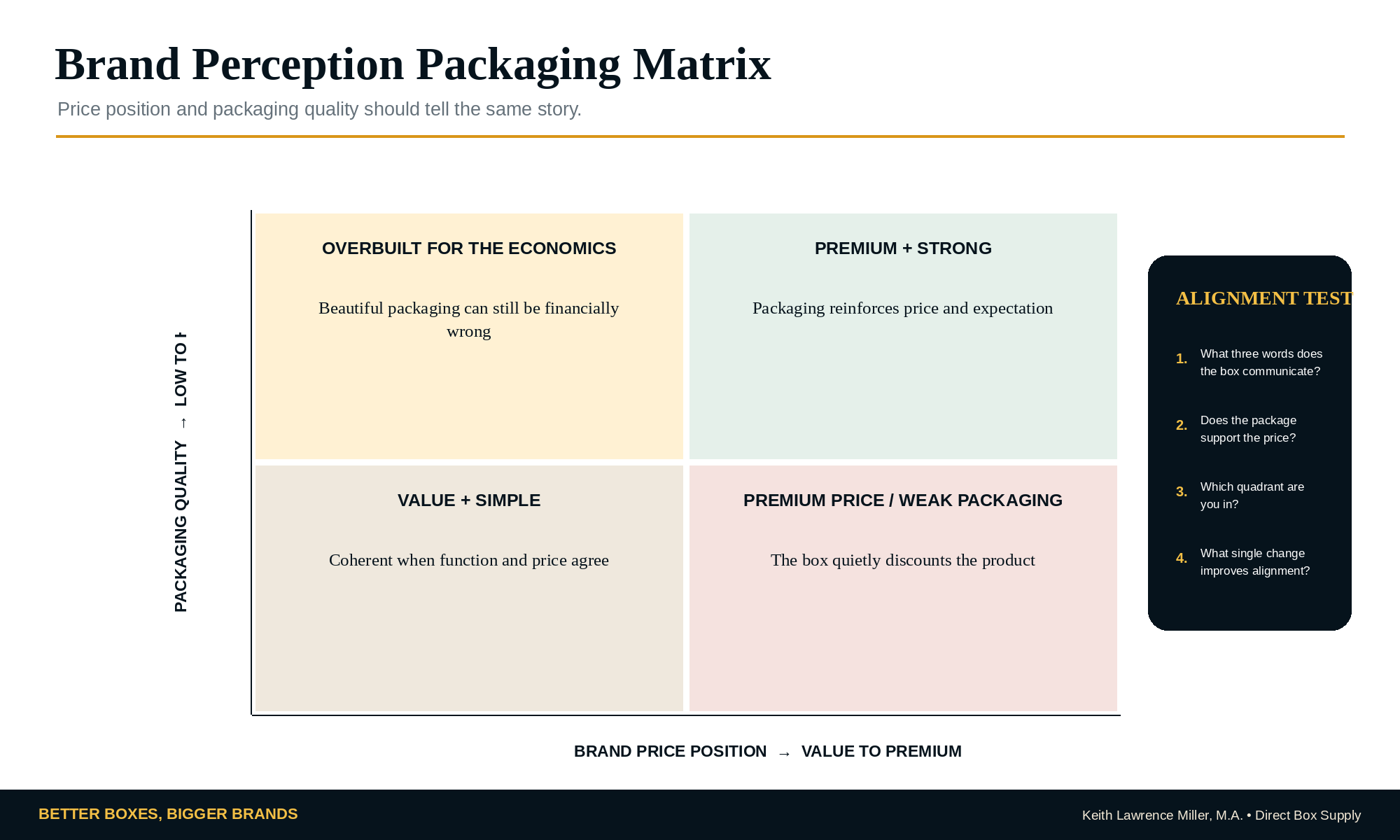
One of the book's core tools is the Brand Perception Packaging Matrix.
It considers two dimensions: brand price position, from value to premium, and packaging quality, from low to high.
A value-priced product with simple functional packaging can be coherent. A premium product with excellent packaging can also be coherent.
Problems emerge when price and physical presentation tell conflicting stories.
The goal is alignment. Packaging should support the brand's position.
The Unboxing Moment Can Be Designed
Unboxing is a physical customer journey.
The package arrives. The customer sees the outside. They break the seal. They open the structure. The product appears. They remove it. They encounter instructions, inserts, messages, or next steps.
Each stage can reduce friction or reinforce the brand.
The goal does not require theatrical packaging. A clean opening, secure fit, clear information, sensible materials, and one thoughtful brand moment can outperform decorative complexity that frustrates the customer.
Packaging at Retail Becomes the Silent Salesperson
A retail shelf changes the environment.
The package needs to communicate quickly: What is this? Who is it for? What makes it different? Does it belong here? Can I trust it?
Retail packaging also carries operational requirements such as barcodes, labeling, display orientation, shelf dimensions, case packing, retailer specifications, and wholesale economics.
A package built only for direct shipping may need to evolve before retail expansion.
Choosing a Box Is a Business Decision
There is no universally superior box style.
The right structure depends on the product, dimensions, weight, fragility, sales channel, shipping method, brand position, assembly needs, order volume, storage, budget, customer experience, and retail requirements.
That is why the book includes a Box Selection Decision Tree.
Structure should follow the problem.
Materials Communicate
Material selection has practical and perceptual consequences.
Board grade affects strength. Surface affects printing. Coatings affect appearance and sometimes handling. Texture affects feel. Finishes change visual hierarchy. Interior printing changes the opening experience.
A premium finish is useful when it reinforces the brand and economics. It becomes waste when applied without purpose.
Physical samples matter. Put options into someone's hands without telling them the prices and listen to what they think each one communicates.
Artwork Problems Become Expensive After Production Starts
A dieline is a production document.
Panels, folds, bleeds, safe areas, cut lines, glue areas, barcodes, legal text, color, resolution, and finishes all need to survive the transition from screen to printed structure.
The book includes an Artwork Preflight Checklist because a careful review before printing costs almost nothing compared with discovering the problem after a production run.
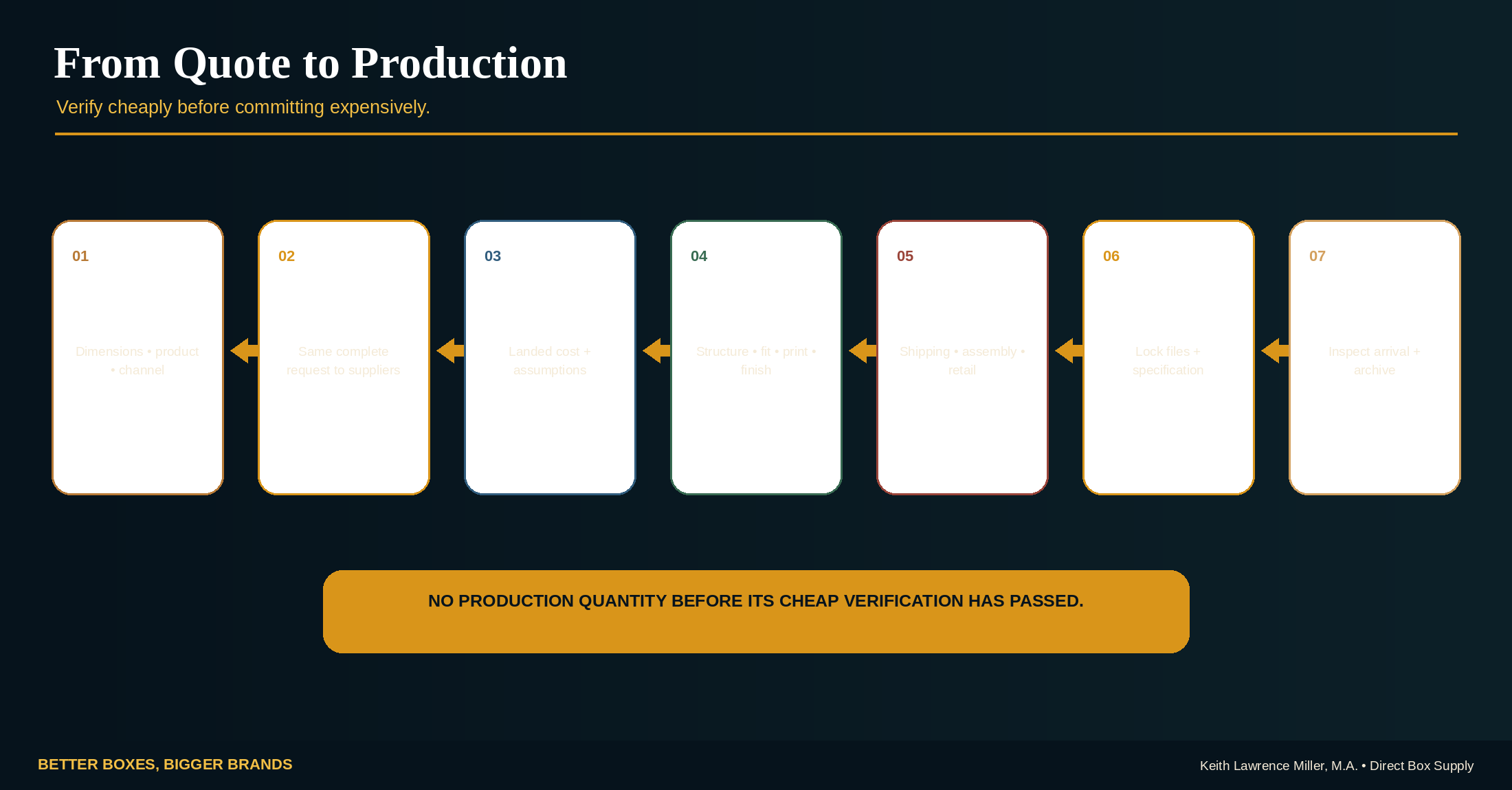
Verify cheaply before committing expensively.
Samples Are Risk Management
A custom packaging sample is a test.
Does the product fit? Does it move? Does the structure close correctly? Does the print appear where expected? Are colors acceptable? Does the finish feel right? Can staff assemble it efficiently? Does the package survive shipping? Does it display correctly?
A sample creates a low-cost opportunity to discover a high-cost mistake.
Comparable Quotes Require Comparable Specifications
One supplier may quote one board grade while another quotes something different. One may include freight while another does not. One may include inserts while another excludes them.
The numbers can look comparable while describing different products.
That is why quote preparation begins with a specification: product dimensions, weight, quantity, channel, box style, material, print, finish, inserts, artwork status, timeline, destination, sampling requirements, and reorder expectations.
When every supplier receives the same request, the quotes become more meaningful.
The Lowest MOQ Is Not Automatically the Best Decision
Minimum order quantity matters because growing brands manage cash carefully.
A very large order may deliver a lower unit price while creating cash-flow pressure, storage demands, inventory risk, obsolescence risk, brand-change risk, and forecasting risk.
A smaller run may cost more per unit and still be the better decision.
The relevant question is: What quantity fits the economics and certainty of the business today?
Reorders Should Become Easier
The second order should be easier than the first.
That requires preserving final specifications, approved artwork, dielines, color references, finish details, sample approvals, production notes, quantity history, supplier information, lead times, shipping assumptions, and any exceptions from the previous run.
Documentation creates repeatability.
Packaging Changes by Industry
The book devotes an entire section to category-specific requirements because products create different packaging problems.
Beauty and wellness, food and consumables, candles, jewelry, apparel, electronics, subscription products, pet products, and handmade goods each create different structural, perception, operational, and compliance considerations.
The fundamentals remain consistent. The application changes.
Sustainable Packaging Requires Specific Claims
Sustainability is an important packaging objective and an area where vague language creates risk.
Specificity is stronger: material composition, recycled content, recyclability under defined conditions, right-sizing, material reduction, reuse, and verified certifications where applicable.
A sustainability claim should be supportable.
Innovation Should Begin With a Test
Packaging technology continues changing. New materials, digital printing, variable data, connected packaging, QR experiences, automation, and smarter production systems create opportunities.
The book treats innovation as experimentation rather than fashion.
A useful test asks: What problem needs solving? Which tool might solve it? Can the idea be tested at small scale? What will success look like? What will it cost? What existing process might it complicate? What happens if it works? What happens if it does not?
Every innovation eventually lands somewhere in the operation. The test is incomplete until operations have voted.
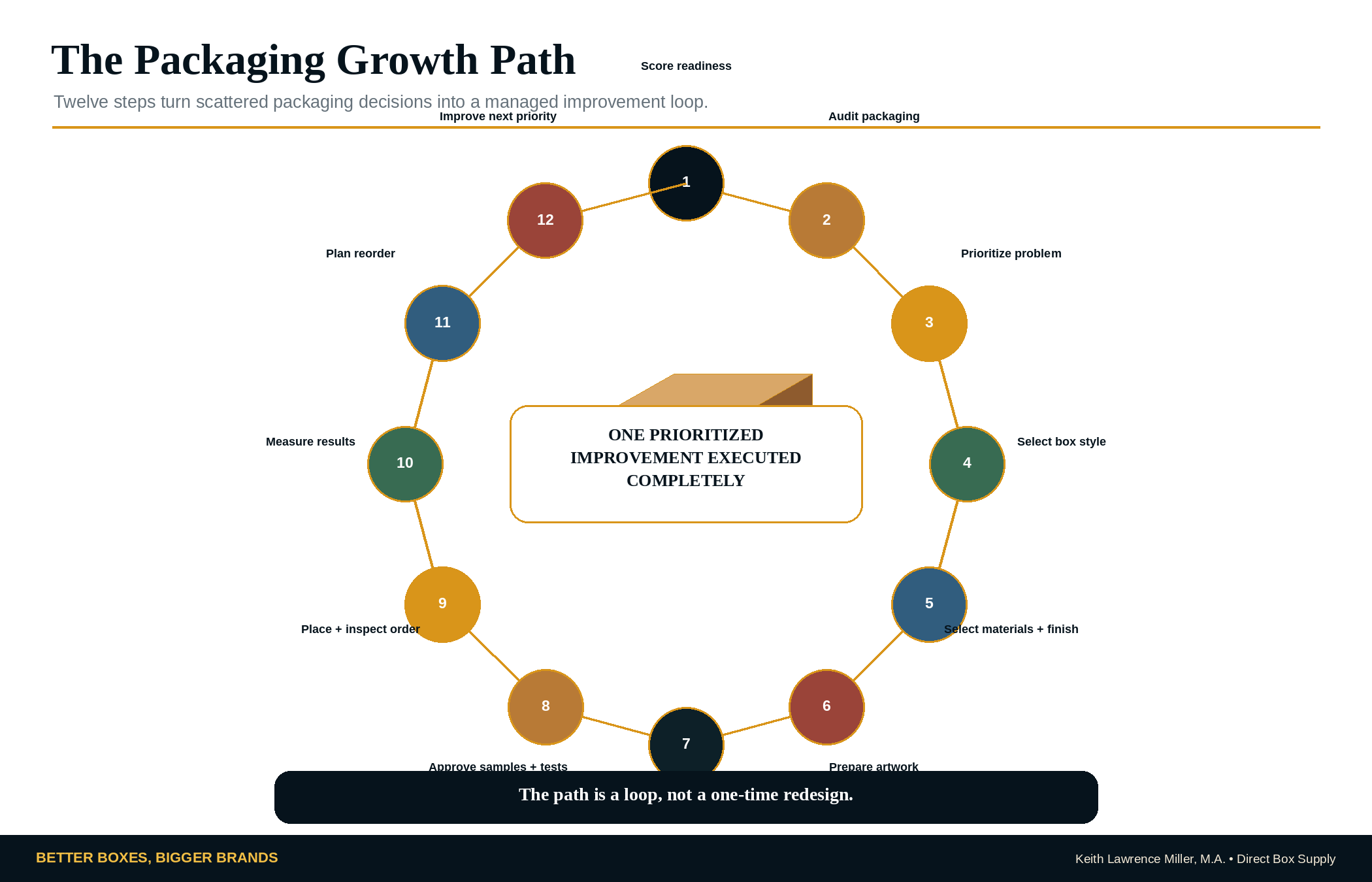
The Packaging Growth Path
The book eventually turns everything into a twelve-step operating loop.
1. Score your readiness.
2. Audit the current packaging.
3. Choose the highest-priority problem.
4. Select the right box style.
5. Select materials and finishes.
6. Prepare the artwork.
7. Prepare the quote request.
8. Approve samples and tests.
9. Place and inspect the order.
10. Measure results.
11. Plan the reorder.
12. Improve the next priority.
Then run the loop again.
That is how packaging becomes a managed system.
Improvement Should Follow Stakes
Founders can look at a packaging audit and discover ten things they want to change.
The book argues for sequence.
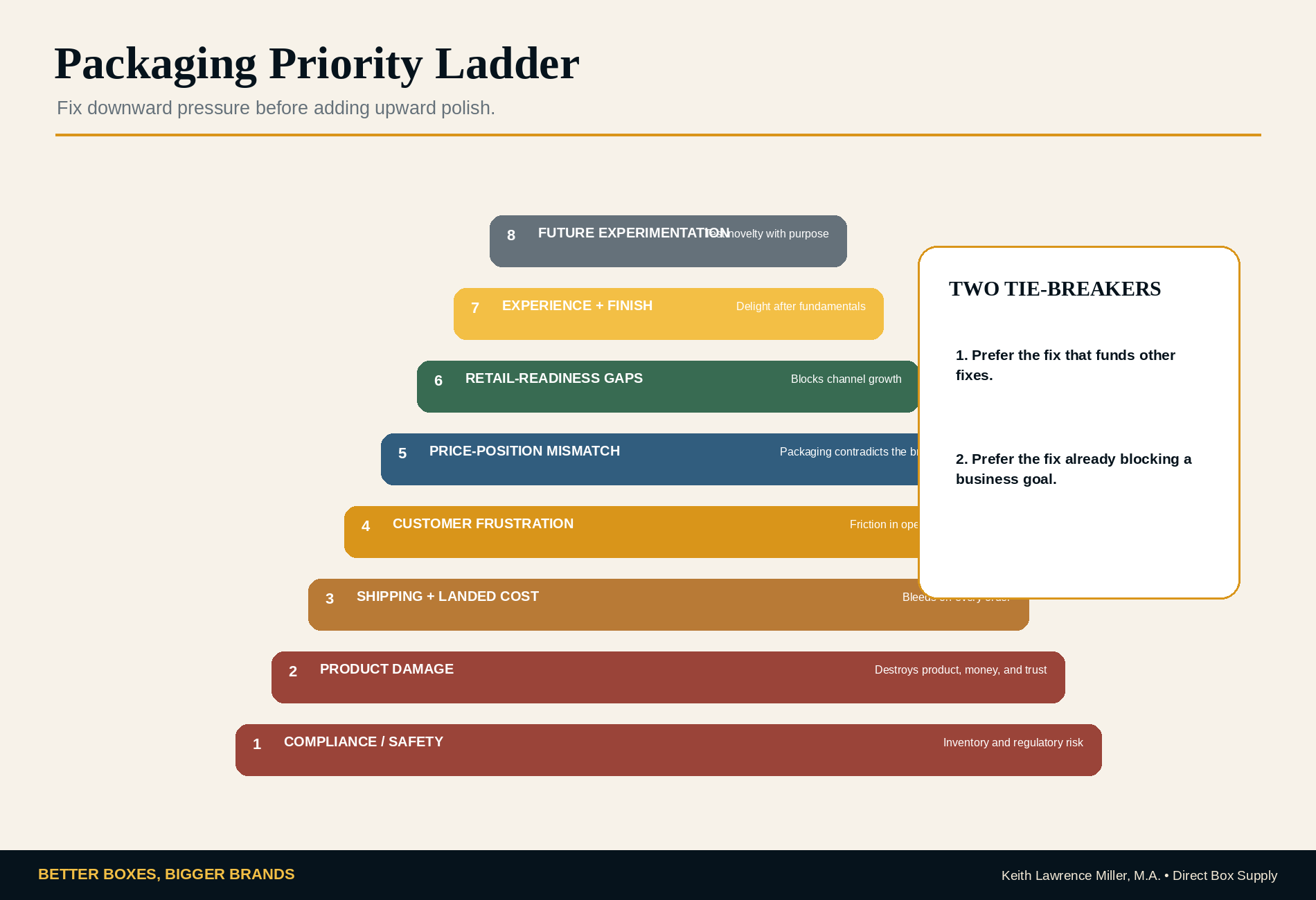
Compliance and safety come first. Product damage comes next. Shipping and landed-cost waste follow because those losses repeat on every order. Customer frustration, price-position mismatch, retail readiness, experience improvements, and future experiments follow according to business priorities.
Fix downward pressure before adding upward polish.
Twenty Tools Turn the Book Into a Working Packaging Department
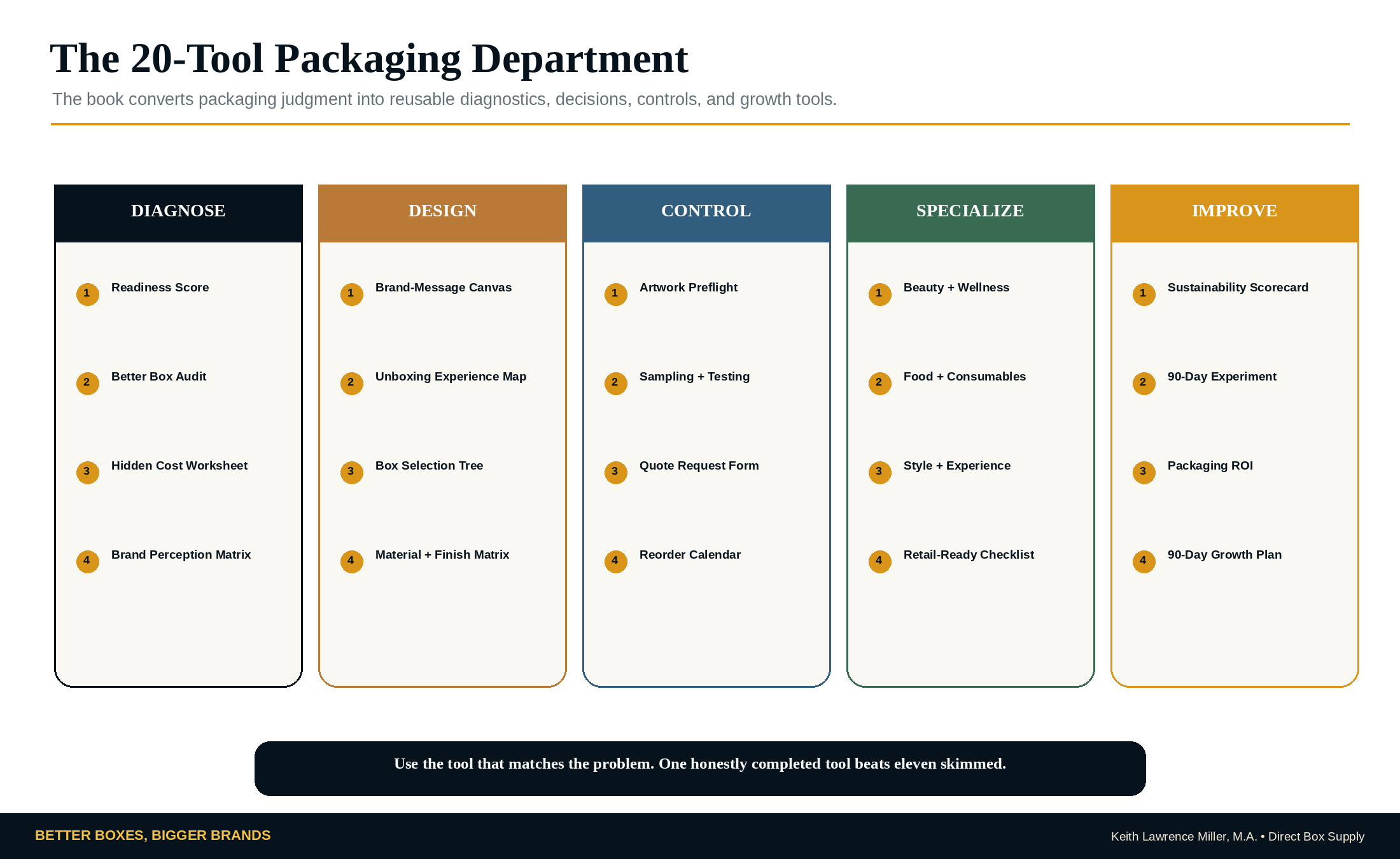
The final Packaging Toolkit consolidates the book's practical systems.
Among the twenty tools are the Packaging Readiness Score, Brand Perception Packaging Matrix, Hidden Packaging Cost Worksheet, Brand-Message Packaging Canvas, Unboxing Experience Map, Retail-Ready Packaging Checklist, Box Selection Decision Tree, Material and Finish Decision Matrix, Artwork Preflight Checklist, Sampling and Testing Checklist, Quote Request Preparation Form, Packaging Reorder Calendar, industry-specific checklists, Better Box Audit, Sustainability Scorecard, 90-Day Packaging Experiment Planner, Packaging ROI Worksheet, and 90-Day Packaging Growth Plan.
The tools are educational planning resources. They organize decisions and surface risks. Technical, legal, regulatory, carrier, retailer, production, and sustainability requirements still need to be verified with current qualified sources.
Real numbers improve the tools: actual dimensions, actual costs, actual shipping data, actual sales velocity, actual supplier quotes, actual samples, and actual requirements.
Who Should Read Better Boxes, Bigger Brands?
This book is for people who make, sell, ship, or retail physical products.
Founders. E-commerce brands. Manufacturers. Private-label businesses. Subscription companies. Food producers. Coffee roasters. Beauty brands. Candle makers. Jewelry businesses. Apparel companies. Pet brands. Electronics sellers. Handmade businesses moving into larger production.
It is especially useful for the growing company where the founder is still performing several packaging-department jobs personally.
The book does not require the reader to become a packaging engineer. It gives the reader a better map.
Packaging Should Serve the Business
A package can be beautiful and economically wrong. It can be inexpensive and operationally wasteful. It can be sustainable in appearance and weak in evidence. It can create a memorable first opening and become irritating by the twelfth subscription delivery.
The correct package serves the whole business: product, customer, brand, operations, channel, economics, and growth.
That is why the six jobs matter. They keep the decision connected to the system.
The Last Few Feet Matter
A founder may spend years developing a product: recipes, formulas, prototypes, manufacturing, marketing, customer acquisition, reviews, relationships, and brand identity.
Then the product travels its last few feet toward the customer inside a box.
Those final seconds deserve the same seriousness.
A better package gives the product a fairer introduction. It protects the work. It communicates the brand. It supports the economics. It creates trust.
It gives a good product the chance to be seen, remembered, and chosen.
The frameworks, checklists, scorecards, and worksheets in this book are educational planning resources. They do not replace engineering, regulatory, legal, carrier, retailer, production, sustainability, or other qualified professional guidance where such expertise is required.